While gold’s rally is often framed as a reaction to short-term volatility, its long-term trajectory is closely tied to the U.S. dollar — the dominant global reserve currency for nearly eight decades.
Introduction
Gold recently crossed $3,700 per ounce, extending a remarkable run that has accelerated since 2020.
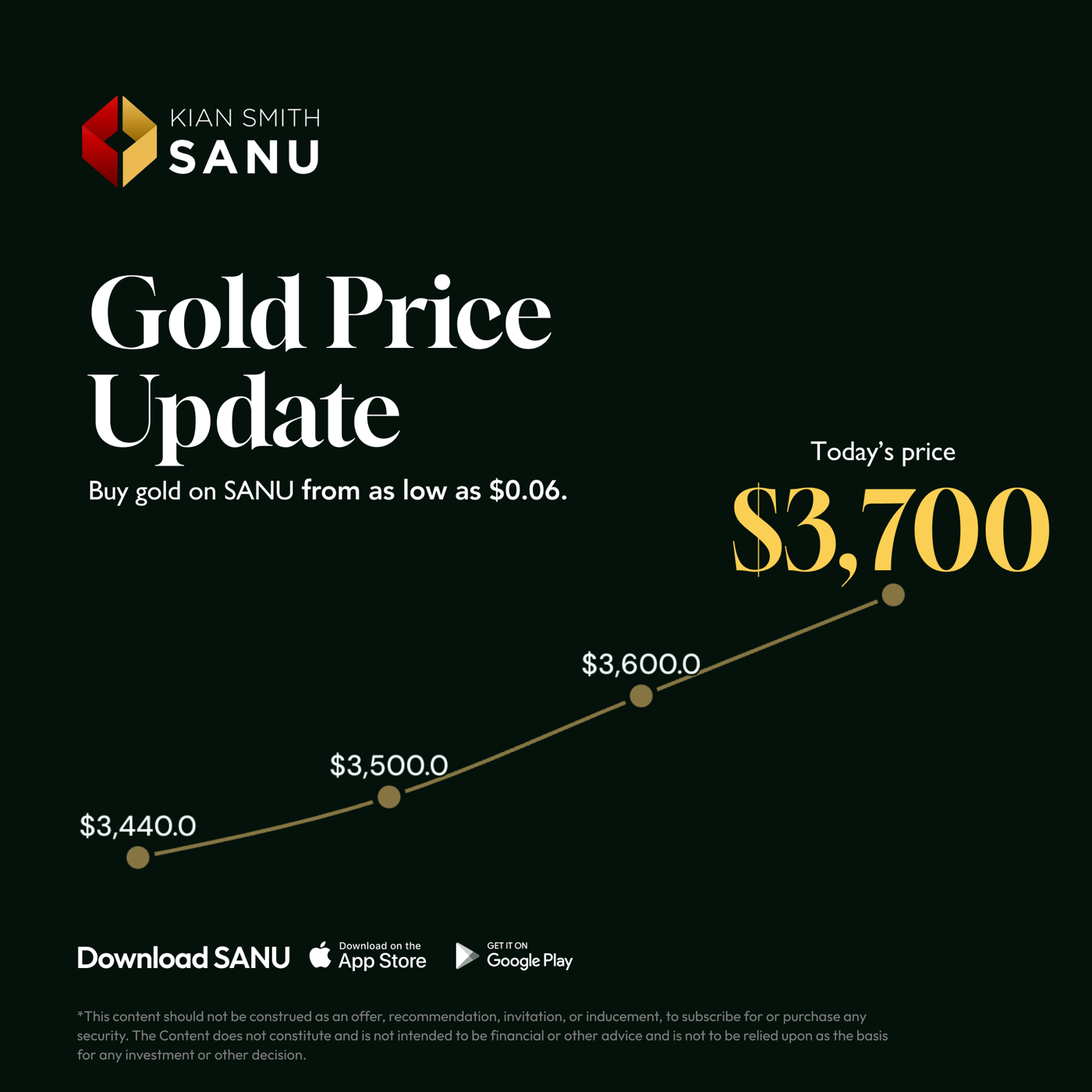
Gold recently crossed $3,700 per ounce
History suggests reserve currencies follow a cycle of 50 to 70 years of dominance before giving way to new monetary orders. With the dollar now well past that average, the rise in gold may reflect not only cyclical market dynamics but also deeper structural questions about the future of global finance.
The Petrodollar and the Dollar’s Age
The U.S. dollar was formalised as the global anchor currency in 1944 under Bretton Woods, when it was pegged to gold and other currencies were pegged to the dollar. That arrangement ended with the Nixon Shock of 1971, which severed gold convertibility.
By 1974, the U.S. had negotiated with Saudi Arabia to ensure oil would be priced in dollars, giving rise to the Petrodollar system. This reinforced dollar demand globally and cemented its role as the world’s reserve.
- Counting from 1944, the dollar has served as a reserve currency for 81 years.
- Counting from the Petrodollar deal in 1974, it has been 51 years.
Both measures place the dollar within or beyond the historical lifespan of reserve currencies.
Gold’s Rise as a Mirror of Stress
Gold’s history since 1971 mirrors major global economic disruptions.
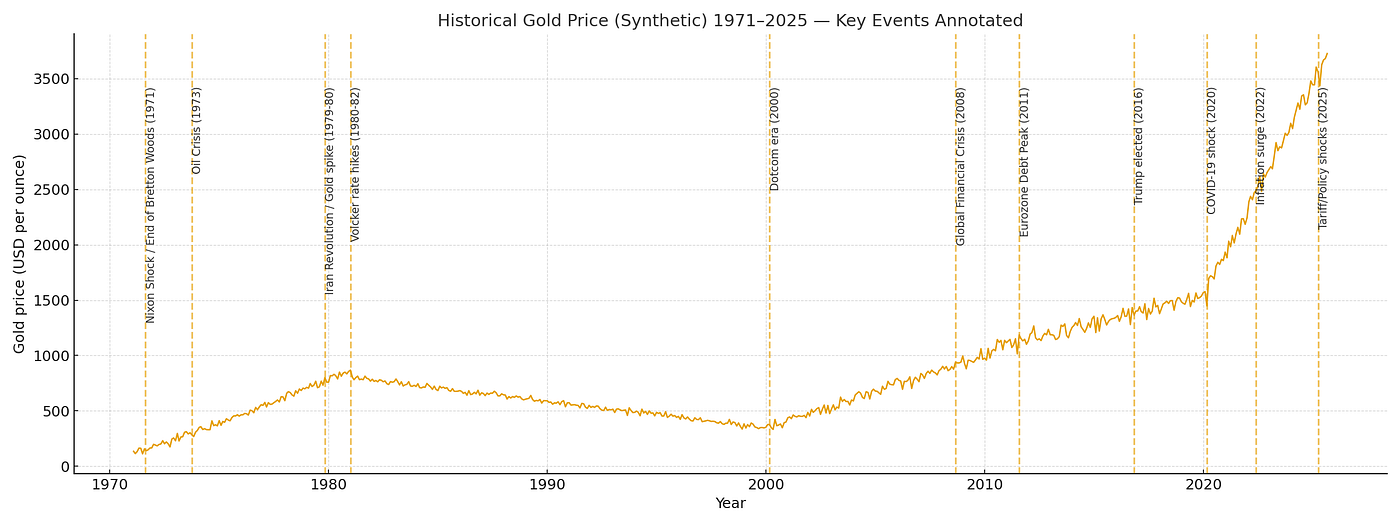
Gold 1971–2025 with key events annotated
- 1970s: Oil shocks, inflation → gold surged from $35 to $850.
- 1980s–1990s: Strong dollar and high interest rates → gold stagnated.
- 2000s: Weaker dollar, rising geopolitical risk → gold rose steadily.
- 2008: Global Financial Crisis → surged above $1,000.
- 2011: Eurozone debt crisis → near $1,900.
- 2020: COVID-19 → break above $2,000.
- 2023–2025: Inflation, geopolitical tensions, and shifting currency confidence → above $3,700.
Gold has risen from $35 an ounce in the early 1970s to above $3,700 in 2025
Hover, focus or click a bar for its detail. Click to pin it and compare the others against it.
Each spike corresponds not only to a crisis but also to declining confidence in the stability of fiat systems.
Gold Under Trump (2017–2021)
Examining the U.S. under President Donald Trump offers a more focused case study of policy correlations.
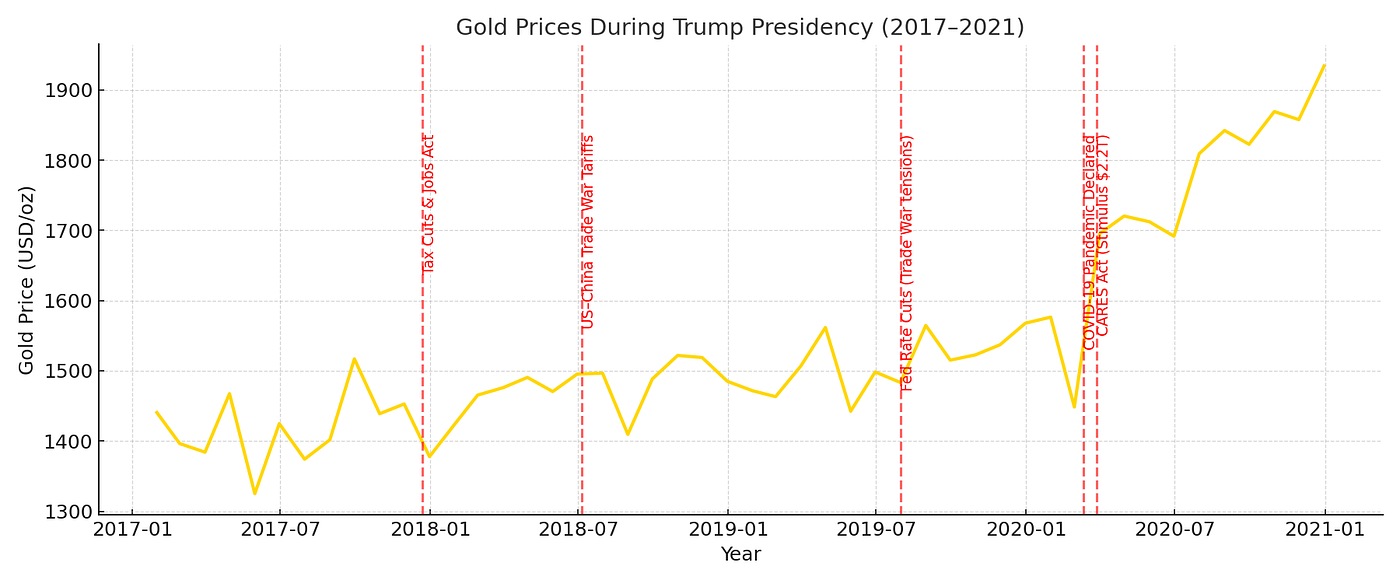
Gold vs Trump-era policies (2017–2021)
- 2017: Tax Cuts and Jobs Act — muted impact but fiscal expansion.
- 2018: U.S.–China trade war tariffs — gold strengthened as uncertainty rose.
- 2019: Federal Reserve rate cuts amid trade tensions — gold rallied further.
- 2020: COVID-19 pandemic and CARES Act stimulus — gold broke above $2,000.
The data reinforce a consistent trend: uncertainty and monetary expansion are correlated with stronger gold prices.
The Reserve Currency Cycle
Across history, global reserve currencies have lasted 50 to 70 years on average.
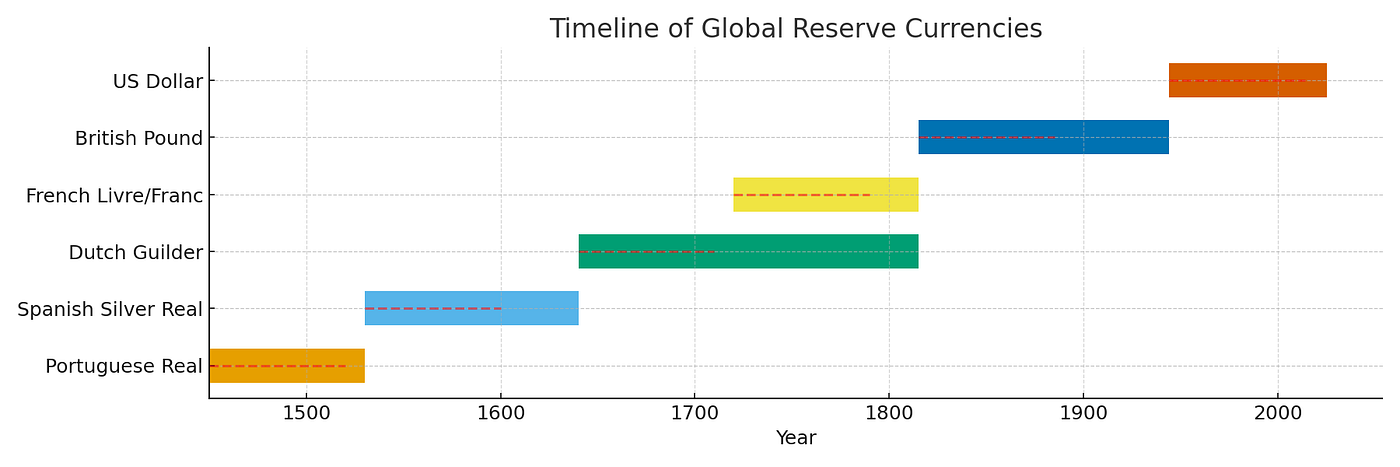
Timeline of Global Reserve Currencies (1450–2025)
- Portuguese real (1450–1530)
- Spanish silver real (1530–1640)
- Dutch guilder (1640–1815)
- British pound (1815–1944)
- U.S. dollar (1944–present)
Each currency in the article's timeline served as a reserve currency for 80 to 175 years
Hover, focus or click a bar for its detail. Click to pin it and compare the others against it.
The dollar’s tenure, depending on the start date, now exceeds this cycle length.
What Comes After the Dollar?
The decline of a reserve currency does not necessarily mean collapse, but transition is rarely smooth. Possible scenarios include:
- Multipolar reserve structure: U.S. dollar, euro, and Chinese renminbi share dominance.
- IMF Special Drawing Rights (SDR): Expansion of basket currency role.
- Commodity-backed baskets: Oil, gold, or rare earths underpin value.
- Digital alternatives: Central bank digital currencies (CBDCs) or Bitcoin as hedge assets.
While no single replacement is yet dominant, diversification away from the dollar is already underway in trade settlements and central bank reserves.
Conclusion
Gold’s rally to record highs is not only a response to inflation and geopolitical risk. It is also a signal of waning confidence in the dollar’s long-term dominance.
If history is a guide, the U.S. dollar has already outlasted the typical lifespan of a reserve currency. Whether the next transition is gradual and multipolar or sudden and crisis-driven, gold will continue to play a central role as a hedge against uncertainty.