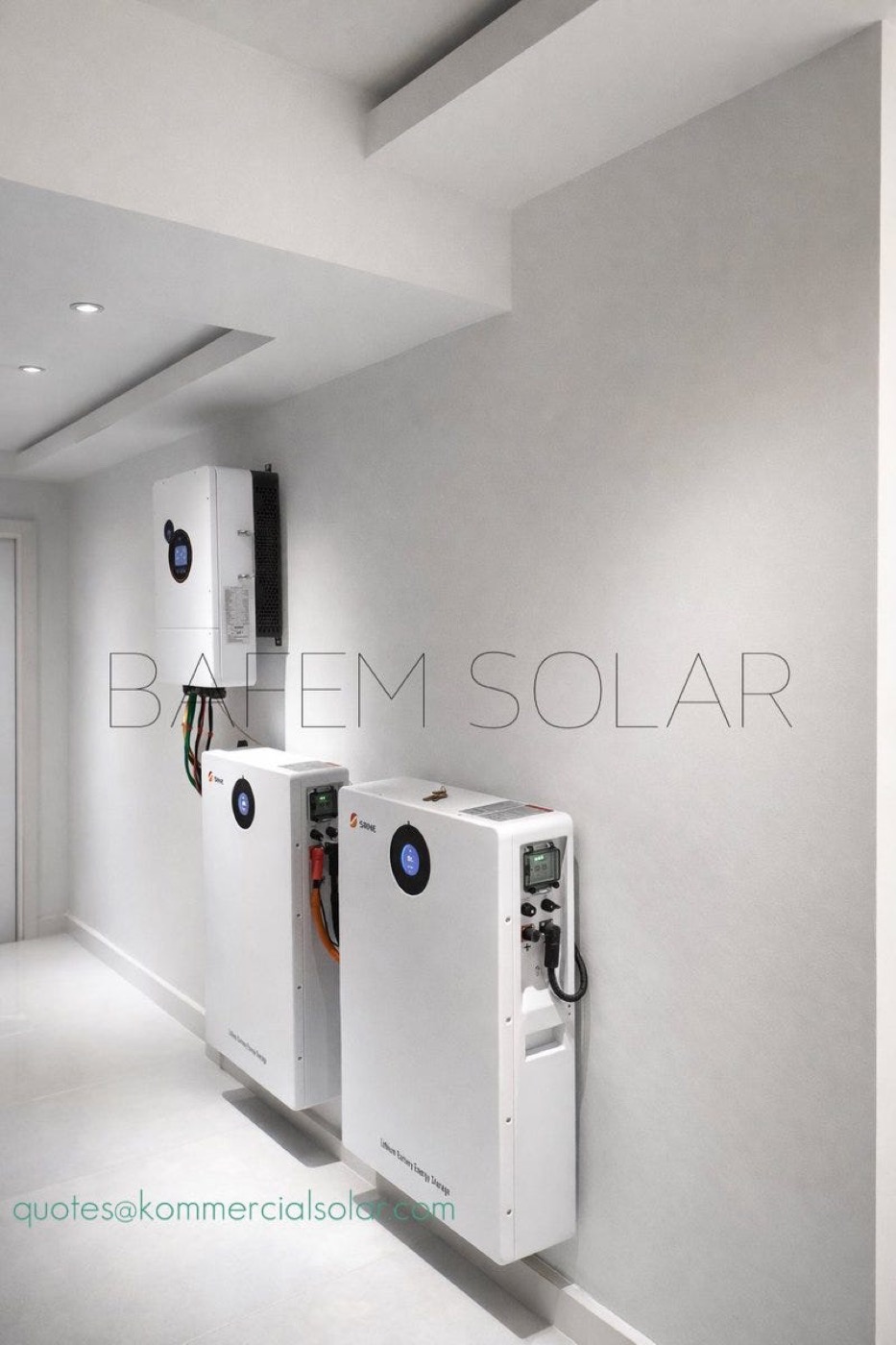
A solar inverter installation. Credit: Bafem Solar
Every market day, Nigerians are told the same story: that the government is spending billions subsidizing electricity, and that consumers are not paying rates that reflect the true cost of generating, transmitting, or distributing power. But here is the truth nobody wants to say out loud: it is actually the reverse. Everyday Nigerians are not just subsidizing electricity: *we are paying our own bills and the government’s at the same time.*
Consider the numbers. Nigeria’s electricity subsidy bill climbed to ₦1.98 trillion over a 12-month period, even after tariff increases for some consumers. And who is driving that bill? In 2024, the Abuja Electricity Distribution Company issued a “Notice of Disconnection” to 86 government ministries, departments, and agencies owing a combined ₦47.1 billion in electricity debt with the Presidential Villa alone accounting for ₦923.87 million. (Source: NigerianEye)
The electricity subsidy ran at ₦1.98 trillion over the twelve months to September 2025
Hover, focus or click a bar for its detail. Click to pin it and compare the others against it.
Source: Nigerian Electricity Regulatory Commission quarterly reports, as reported by BusinessDay, 7 January 2026; Q3 2025 also reported by ICIR (headline ₦459.75bn, text ₦458.75bn; the text figure is used)
The annual electricity subsidy rose from about ₦650 billion in 2023 to ₦1.95 trillion in 2024 and stayed near that in 2025
Hover, focus or click a bar for its detail. Click to pin it and compare the others against it.
Source: NERC 2024 Annual Report & Accounts, as reported by ESI-Africa (2024: ₦1,949.17 billion); Techeconomy, citing NERC data reported by BusinessDay (2023: about ₦650 billion; 2025: roughly ₦1.92 trillion)
Here is the part that should make every Nigerian pause. The generators at Aso Rock were installed when the complex was originally built in the late 1980s and early 1990s under General Ibrahim Babangida. (Source: Platform Times). This means that for over thirty years, the seat of Nigerian government has relied on backup generators, just like the rest of us. The grid was never reliable enough even for the presidency. For decades, Aso Rock ran on a combination of AEDC grid supply and those ageing generators, racking up bills it often refused to pay, while owing hundreds of millions to the same distribution company responsible for powering ordinary Nigerians.
Then in 2025, the government did something that said the quiet part loudly. The Federal Government announced plans to install a ₦10 billion solar power grid at Aso Rock Presidential Villa, citing an annual electricity bill of ₦47 billion as unsustainable. (Source: The Africa Report). The public reaction was immediate and furious. While millions of Nigerians sit in darkness, the seat of power was insulating itself from the very crisis it had failed to resolve. Punch (Source: Punch)
The transition happened in stages. The State House Medical Centre went solar in May 2025, and since that time, the generator there has not been switched on for a single minute with only three per cent of supply coming from AEDC in a couple of months, the rest entirely from solar and battery storage. (Source: Platform Times). By February 2026, the State House announced plans to fully disconnect from Nigeria’s national grid in March 2026, with the solar installation completed late in 2025 and undergoing testing since December. Vanguard News (Full story: Vanguard | The Nigerian Voice)
Let that sink in. The Nigerian government spent thirty years on generators, racked up nearly a billion naira in unpaid electricity bills, and has now spent ₦17 billion of public money to go solar while telling ordinary Nigerians to wait for grid fixes that never come.
And what happens when a DISCO dares to try to collect from government debtors? In March 2025, the Nigerian Air Force attacked Ikeja Electric staff, abducted the CEO, and ransacked the offices of the electricity provider after power was disconnected for non-payment over a ₦4 billion debt. (Full story: Vanguard | Punch)
Table: Figures quoted in this article, with the source it names
| Item | Amount | Period | Source named in the article |
|---|---|---|---|
| Electricity subsidy bill | ₦1.98 trillion | 12 months | NERC, via BusinessDay |
| Debt of 86 federal ministries, departments and agencies to AEDC | ₦47.1 billion | Notice of disconnection, 2024 | NigerianEye |
| Presidential Villa's share of that debt | ₦923.87 million | 2024 | NigerianEye |
| Presidential Villa's annual electricity bill | ₦47 billion | Cited in 2025 | Platform Times; The Africa Report |
| Solar project at the Presidential Villa | ₦10 billion announced; ₦17 billion spent, in the article's account | 2025 to 2026 | The Africa Report; Vanguard |
| Ikeja Electric debt behind the March 2025 incident | ₦4 billion | March 2025 | Vanguard; Punch |
| Spending on petrol and diesel generators | More than $20 billion a year | Annual | Punch |
| Grid voltage received in many places | 90 V to 280 V, against 220 to 240 V standard | – | The ICIR |
So before you wonder why there is no light, start there. And then go and buy solar.
Every “Solution” Tells a Story
When I say “buy an inverter,” I want you to understand what I actually mean and what I don’t.
Over the years, Nigerians have built an impressive, quietly heartbreaking catalogue of workarounds: buying stabilizers and voltage guards — not as a convenience, but as mandatory insurance against the grid destroying the appliances we saved up to buy, surge protectors, electric fences, overhead tanks, boreholes, private security, generators, SUVs built for bad roads, and of course, Japa. Each item on that list is not a personal choice — it is a receipt. A receipt for a specific, documented failure of the Nigerian state across multiple administrations and generations.
Nigerian businesses and households spend more than $20 billion annually on diesel and petrol generators, effectively operating a “shadow grid” that generates far more power than the national grid — but at a higher cost and with far greater inefficiency. (Source: Punch)
And it is not just the absence of power that costs Nigerians money — it is the quality of power when it does show up. Instead of the standard 220–240 volts that every appliance in your home is designed for, many parts of Nigeria receive voltages as low as 90V or as high as 280V from the national grid. (Source: The ICIR) In Nigeria, household electrical and electronic appliances are most times under threat of low voltage supply — this low supply voltage causes these appliances to malfunction, or in worse conditions, get damaged entirely. (Source: Ecofin Agency). Among all the power quality problems experienced in Nigeria, low voltage supply is foremost. The supply can drop as low as 45–80% of the rated minimum, with voltage values between 40V and 110V recorded at consumer terminals, generally below the standard requirement for the operation of any electrical or electronic device. (Source: Primebusiness) Your fridge, your TV, your washing machine, your air conditioner — all of them rated for 220V — are quietly being destroyed every time the light comes on. This is why the stabilizer became another permanent line item in the Nigerian household budget. We do not just buy appliances in this country. We buy appliances, then buy a stabilizer to protect them from the electricity that is supposed to power them. (Sources: PowerFlux Mall | Mediterranean Publications Research, 2023 | ResearchGate)
The failure runs so deep it has even reshaped our theology. In a functioning country, the best universities should be government-owned. Covenant University has, once again, retained its position as the leading higher institution in Nigeria — ranked №1 in Nigeria, №1 in West Africa, and №6 in Sub-Saharan Africa in the 2025 Times Higher Education rankings. (Source: Zawya). This is a private, church-owned university in Ota, Ogun State, consistently outperforming every federal and state university in the country. (Source: Covenant University | Vanguard). There are employers today who will not open your CV — no matter your grades, no matter your skills — simply because you did not attend a private university. That is not just an education problem. That is civilizational failure, playing out in a recruiter’s inbox.
So when I say “buy solar,” I am not handing you another item for that list. I am saying this one is different.
Why Solar is Not the Same as a Generator
I have owned three or four inverters between 2015 and today, about ten years. And I want to be honest with you: it still feels like magic.
In ten years, I have never come home to a dark house. I have never left the house with a dead phone. I have never tried to sleep in suffocating heat because there was no power. Not once.
My first was the MTN Lumos, back in 2014/2015. The transformer in my area had packed up and in Nigeria, that can mean no power for the next one to two years, which is exactly what happened. I already had a generator, but I hated it. The noise, the fumes, the fuel. Every time I bought fuel to run that generator, it felt like collecting money specifically to set it on fire.
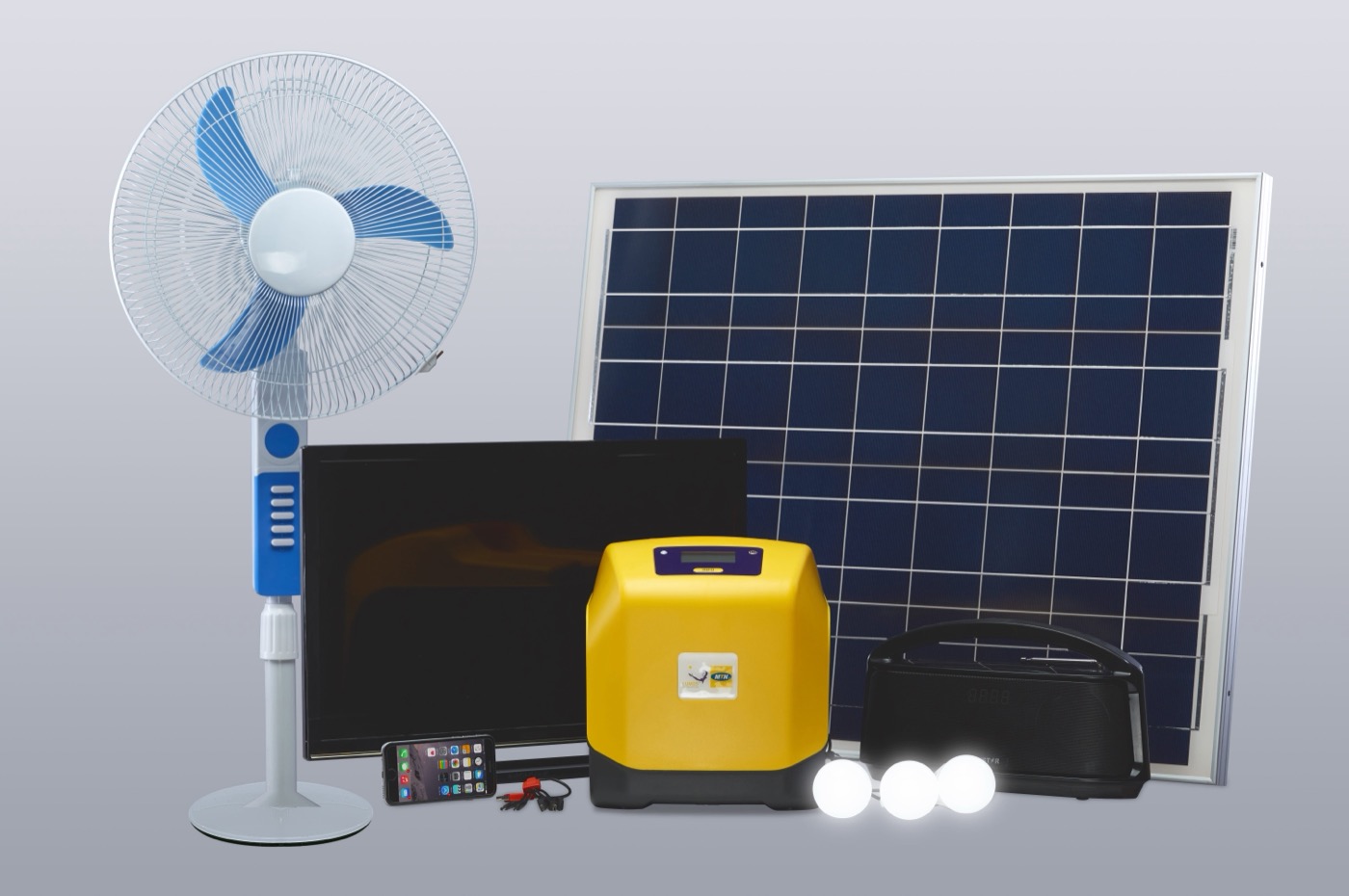
MTN Lumos
I found my way to the MTN office at Shoprite Lekki, made enquiries, and paid a deposit with installments spread over time. The Lumos system works on a pay-as-you-go model — the solar panel charges a built-in battery, but the stored energy is only accessible once you make a payment. After 1,800 paid days, full ownership transfers to you.
(Full specs and review: SolarKobo | NaijaTechGuide)
That small inverter powered two bulbs — one in my kitchen, one in my study. It charged my laptop, my phone, my power bank, and a small fan simultaneously, for three to five hours at night on a single charge. For over two years while our transformer was gone, that device was my lifeline. I was leaving the house at 4:30am and returning at 10, 11pm, sometimes midnight. The thought of coming home to fight with a generator at that hour would have broken me.
Here is the fundamental difference between solar and every other solution on that Nigerian list: the others keep taking money out of your pocket for as long as they work. Solar puts money back in your pocket from day one. No fuel runs. No mechanic. No noise. And if you needed any proof that solar is the future — the Nigerian government just spent ₦17 billion of your money making that exact same switch for itself.
So What Are Your Options Today?
The good news is that the market has grown enormously since my Lumos days. Whether you have ₦100,000 or ₦800,000 to work with, there is now an entry point for almost every budget. Here is a breakdown of the main brands available in Nigeria today and what each can realistically power:
Table: Solar and battery options on sale in Nigeria, Q1 2026 prices
| Brand | Entry model | Min price | Capacity | Panel | What it can power |
|---|---|---|---|---|---|
| Sun King | Home 200 | ₦105,000 (or ~₦2k/mo) | ~15Wh | 15W | 3 LED lights, USB phone charging; up to 30 hrs on low |
| Sun King | Home 600 | ₦150,000 (or ₦1,500/wk) | 122Wh | 30W | LED lights, phone charging, fan or small 19" TV; ~6 hrs full load |
| d.light | X1000 Neo | ₦242,300 (or ₦17,100/mo) | ~86Wh | 40W | Tube light + 4 bulbs, 32" solar TV, fan, radio; up to 18 hrs lighting |
| Beebeejump | S1 | ₦260,000 | 338Wh | 160W | DC fans, TV, decoder, LED bulbs (8–10 hrs); laptops, desktop PCs via 150W AC inverter |
| EcoFlow | RIVER 2 | ₦301,099 | 256Wh / 300W output | Panel sold separately | Laptops (×4), phones (×21), mini fridge, LED lights, fans, router; 5 outlets simultaneously |
| EcoFlow | DELTA 2 | ₦767,000+ | 1,024Wh / 1,800W output | Up to 500W input | Fridge, washing machine, AC (daytime), TV, fan, lights, laptops; 90% of home appliances |
Beebeejump's S1 and EcoFlow's DELTA 2 cost the least per watt-hour of battery; Sun King's Home 200 costs the most
Hover, focus or click a bar for its detail. Click to pin it and compare the others against it.
A few things worth knowing before you buy:
Sun King is the clear entry-level winner. At ₦105,000 for the Home 200 — available in tiny weekly installments — it is the closest thing today to what my dry cleaner pays monthly. Lights and charging only, but it gets the job done and gets you started.
d.light has a strong pay-as-you-go model and the X1000 Neo at ₦242,300 is a solid complete home system. The ability to add a 32" solar TV makes it a real living room solution, not just a torchlight upgrade.
Beebeejump (BBJ) is arguably the best value per watt-hour in this price tier. The S1’s 338Wh battery with a 160W panel is meaningfully larger than d.light’s X1000 for a similar price — and the built-in 150W AC inverter means you can run actual AC appliances like laptops, desktop PCs, and hair clippers. Their H-series (H1 to H5) scales all the way up to 5kVA+ for households that need pumping machines and air conditioning.
EcoFlow is in a different category entirely — premium, portable, and no solar panel included in the base price. The RIVER 2 at ₦301,099 is clean technology at its finest, but you are still buying panels separately. The DELTA 2 at ₦767,000+ is for households serious about energy independence — it can run a fridge, washing machine, and air conditioning during daylight hours.
Prices sourced from official brand stores, Jumia NG, and verified Nigerian resellers as of Q1 2026. Naira prices fluctuate with exchange rates — always confirm with the seller before purchasing.
This is Not a Rich Man’s Recommendation
I know what you might be thinking. “Easy for you to say — not everyone has ₦2 million sitting around.” You are absolutely right, and that is not what I am asking.
Look at Sun King’s Home 200 at roughly ₦2,000 a month on installment. That is less than most people spend on generator fuel in a week. My dry cleaner pays something close to that and now has light every night. That is his entry point. Yours might be different, maybe it is a d.light X1000 Neo on the ₦17,100/month plan, or a Beebeejump S1 once you save up — but the point is that there is almost certainly a door into this world that fits your current budget if you look honestly at the options.
And before you say “but when the rains come, power supply improves” — yes, it does, slightly. But let us be serious with each other. Nigeria’s electricity sector is facing deep structural challenges, with experts warning that the national power supply system has become “totally derailed” following repeated grid failures and declining generation. (Source: Esi-africa). Over a period of eighteen years, the grid fell both partially and totally almost two and a half times per month on average. Source: Kashgain) And on the days the power does come, it often arrives at 90 volts — enough to flicker your bulbs, not enough to run your fridge, and just enough to silently burn out your compressor over time. Air conditioners, refrigerators, smart TVs, deep freezers, and washing machines are all vulnerable to these power fluctuations — motors overheat, circuit boards fail, and devices that should last ten years are written off in three. The ICIR (Sources: Nigeria Housing Market | Covenant Journal of Engineering Technology, 2023 | PowerFlux Mall)
Whoever is promising you 24/7 power within one to five years is not being straight with you. The government spent three decades on generators at Aso Rock before finally going solar in 2025. They did not fix the grid for themselves. They went off it. The structural problems — debt, interference, unpaid bills, infrastructure decay — do not get fixed in one budget cycle.
So yes, buy solar. Not because I am out of touch. Not because I do not understand what money means. But because after ten years of living with it, I know what it feels like to come home and simply turn on the lights — and I think you deserve that feeling too.
References & Further Reading
- Aso Rock ₦923m Power Debt — NigerianEye
- Aso Rock’s Solar Power Cocoon — Vanguard
- Tinubu Presidency to Fully Disconnect Aso Rock from Grid — The Nigerian Voice
- Aso Rock’s Power Bill Hit ₦47bn — Pulse Nigeria
- FG Begins ₦10bn Aso Rock Solar Project — Guardian
- Aso Villa’s Insular Solar Power Project — Punch
- Nigerian Air Force Attacks Ikeja Electric — Vanguard
- How Air Force Officers Tortured Ikeja Electric Workers — Punch
- Nigeria’s Electricity Crisis — Punch
- MTN Lumos Products — Lumos Nigeria
- MTN Lumos Full Review — SolarKobo
- Sun King Nigeria
- d.light Products
- Beebeejump Nigeria
- EcoFlow Nigeria
- Low Voltage & Appliance Damage in Nigeria — PowerFlux Mall
- Voltage Quality Problems in Nigeria — Mediterranean Publications Research Journal, 2023
- Dwindling Electrical Power Supply in Nigeria — ResearchGate
- Nigeria’s Power Supply “Totally Derailed” — Nigeria Housing Market
- Electric Grid Reliability Assessment — Covenant Journal of Engineering Technology, 2023